Showing posts with label Environment. Show all posts

Thursday, June 23, 2011

Green growth key to Asia-Pacific food, energy security

Thursday, June 23, 2011

Asia-Pacific countries can cushion themselves against food and fuel price shocks and natural disasters by more efficient use of resources and energy, the United Nations economic body, ESCAP, told a forum of world leaders in Seoul on Monday.

"Green growth remains an essential and urgent task for enhancing the energy and food security of each country (in the Asia-Pacific region)," UN Under-Secretary-General and Executive Secretary of the UN Economic and Social Commission for Asia and the Pacific (ESCAP), Dr. Noeleen Heyzer told the Global Green Growth Summit organized by the Government of the Republic of Korea and the Organisation for Economic Cooperation and Development (OECD).

The one-day summit marking the 50th anniversary of the establishment of OECD brought together 800 participants from 25 countries, a press release issued by the UN Information Center (UNIC) said here on Tuesday.

The current energy, resource and carbon intensive development pattern must give way to Green Growth? to reduce wasteful use of resources and energy, Dr. Heyzer said, adding that this was particularly important at a time when the Asia-Pacific region faces triple threats from recurring climate-related natural disasters and soaring food and fuel prices. Latest ESCAP estimates show that rising food and oil prices can keep an additional 42 million people in the region in poverty in 2011.

The region is also the world's most vulnerable to natural disasters, with its people four times more likely to be affected by nature?s wrath than those in Africa and 25 times more likely than those in Europe or North America.

"Green Growth, as one of the strategies to achieve sustainable development by improving the efficiency of the way we use our energy, resources, and in particular carbon, is no longer only an ecological conditionality but also an imperative to improve resilience of our economy against energy, food and resource price volatility," Dr. Heyzer told the summit.

"For Asia and the Pacific, a region whose efficiency in using energy and resources still remains low, improving the efficiency of our production and consumption will provide us with a new engine of growth," the ESCAP chief pointed out.

Green growth needs to be linked to inclusive and equitable economic initiatives and can be part of regional, subregional and bilateral development initiatives and partnerships. ESCAP has been pioneering green growth in the region, an example being the 2010 Astana Green Bridge Initiative linking Europe with Asia and the Pacific which will promote inter-regional cooperation in pro-poor, pro-environment growth. ESCAP is also developing a Low Carbon Green Growth Roadmap for the region funded by the Government of the Republic of Korea.

The world will have the chance at the 2012 UN Conference on Sustainable Development (Rio+20) in Brazil to commit itself to a global green economic growth model based on a partnership between rich and poor nations, Dr.Heyzer said.
Read More....

Saturday, June 18, 2011

UNEP-WMO assessment complements urgent action needed to cut CO2 emissions

Saturday, June 18, 2011

Fast action on pollutants such as black carbon, ground level ozone and methane may help limit near term global temperature rise and significantly increase the chances of keeping temperature rise below 2 degrees Celsius, and perhaps even 1.5 degrees Celsius, according to a new assessment.

Protecting the near-term climate is central to significantly cutting the risk of "amplified global climate change" linked with rapid and extensive loss of Arctic ice on both the land and at sea, the United Nations Environment Program (UNEP) said in a press statement sent from Bonn, Germany.

Fast action might also reduce losses of mountain glaciers linked in part with black carbon deposits while reducing projected warming in the Arctic over the coming decades by two thirds.

The scientists behind the assessment, coordinated by the United Nations Environment Programme (UNEP) and the World Meteorological Organization (WMO), also point to numerous public health and food security opportunities above and beyond those linked with tackling climate change.

Big cuts in emissions of black carbon will improve respiratory health; reduce hospital admissions and days lost at work due to sickness, says the assessment, whose Secretariat is provided by the Stockholm Environment Institute.

Indeed close to 2.5 million premature deaths from outdoor air pollution could on average be avoided annually worldwide by 2030 with many of those lives saved being in Asia, it is estimated.

Big cuts in ground level ozone could also contribute to reduced crop damage equal to between one to four per cent of the annual global maize, rice, soybean and wheat production.

Cutting these so-called `short-lived climate forcers` can have immediate climate, health and agricultural benefits, the report concludes.

This is because, unlike carbon dioxide (CO2), which can remain in the atmosphere for centuries, black carbon, for example, only persists for days or weeks.

The researchers however also underline the fact that while fast action on black carbon and ground level ozone could play a key role in limiting near-term climate, immediate and sustained action to cut back CO2 is crucial if temperature rises are to be limited over the long-term.

It is the combination of action on short-lived climate forcers and long-lived greenhouse gases which improves the chances of keeping below the 2 degree target throughout the 21st Century.

The findings, released recently in Bonn, Germany, during a meeting of the UN Framework Convention on Climate Change (UNFCCC) have been compiled by an international team of more than 50 researchers chaired by Drew Shindell of the National Aeronautics and Space Administration (NASA).

Achim Steiner, UN Under-Secretary-General and UNEP Executive Director, said: "There are now clear, powerful, abundant and compelling reasons to reduce levels of pollutants such as black carbon and tropospheric ozone along with methane: their growing contribution to climate change being just one of them."

"This assessment underlines how the science of short-lived climate forcers has evolved to a level of maturity that now requires and requests a robust policy response by nations. The experts spotlight how a small number of emission reduction measures-- targeting for example recovery of methane in the coal, oil and gas sectors through to the provision of cleaner burning cook stoves; particle traps for diesel vehicles and the banning of open

burning of agricultural wastes-- offer dramatic public health, agricultural, economic and environmental benefits," he added.

The UNEP/WMO Integrated Assessment of Black Carbon and Tropospheric Ozone suggests that action could be catalyzed through not only the UN climate convention process but also via, for example, strengthening existing national and regional air quality agreements.

Michel Jarraud, Secretary-General of the WMO, said: "Most attention is focused on reducing the main greenhouse gas, CO2, to combat climate change. However, in recent years it has become clear that a range of other pollutants such as black carbon and tropospheric ozone are aggravating the challenge."
Read More....

Sunday, June 12, 2011

More Indonesian bird species nearing extinction

Sunday, June 12, 2011

More Indonesian bird species are threatened by extinction due to the loss of their habitat to forest destruction or conversion, according to the Indonesian Wild Bird Conservation Association.

"In 2010 the number of species threatened was recorded at only 122 but it has now risen to 123," Bird Conservation Officer Dwi Mulyawati said here on Saturday.

She said of the species 18 were categorized as endangered while 31 others endangered and 74 vulnerable.

Therefore "Indonesia has been put into the blacklist of the International Union for Conservation of Nature (IUCN), " she said.

Dwi said the new bird species that has been put into the list of endangered species is "Gosong Sula" (Megapodius Bernateinii) from formerly under near threatened category to vulnerable.

She said the bird species had become increasingly endangered because their natural habitat was damaged.

Dwi said forests were an important habitat for birds as more than half of birds live in the forests as their main habitat.

Due to conversion of forests into agricultural land in Taliabu on Sula Islands for example Gosong Sula is now losing their habitat there.

"The egg and meat of the 35 cm long bird is now still considered primadona food by local people causing the bird`s population growth to be hindered," she said.

Gosong Sula is a bird species that can be found in Banggai and Sula Islands in the Wallace zone, she said.

These birds are inhabitants of low land forests and coastal areas. They live in couple and in group of up to five.

The dark brown birds take the benefit of earth heat for hatching like "maleo senkawor" (macrocephalon maleo).

"In their natural habitat their number is estimated at around 1,000," she said.

Efforts have to be made to protect this bird by prioritizing important bird zone (DPB) despite the challenge that not all DPB is located in conservation areas but some are found spreading in production forests, she said.

Dwi said Indonesia as the owner of the world`s third largest tropical forests is the center of the world`s bio-diversity from eco-system, flora and fauna species to bird species.

Of a total of almost 10,000 bird species in the world, 1,594 are found in Indonesia.
Read More....

Saturday, June 11, 2011

Yudhoyono appreciates early environment education

Saturday, June 11, 2011

President Susilo Bambang Yudhoyono expressed his appreciation to teachers and schools that have conducted environment education for their students from elementary to senior high school level.

"Anyone who knows education thinks that the first 12 years is the golden age for building one`s character and behavior," he said in his speech at the Environment Day commemoration at the Presidential Palace here on Tuesday.

President Yudhoyono said efforts by the teachers and schools must be supported so that more and more children of Indonesia would be made aware of the importance of the environment.

On the occasion, President Yudhoyono presented awards for schools that have environment outlook.

Among the elementary schools receiving the awards are SDN 12 Bendungan Hilir, Jakarta, SDN 9 Bantarjati, Bogor, West Java, SDN4 Metro, Lampung, SDN Kandangan III Surabaya, SDN 001 Lima Puluh, Pekanbaru, Riau, SDN Dinoyo III, Malang, East Java, and DDN 005 Bukit Raya, Pekanbaru, Riau.

Awards for junior high schools went to SMPN 2 Kebomas, Gresik, East Java, SMPN 1 Merakurak, Tuban, East Java, SMPN 10, Sukabumi, West Java, SMPN 10 Samarinda, East Kalimantan, SMPN 1, Cigombong, Sukabumi, West Java, SMP Muhammadiyah Yogyakarta and SMP 1 Balikpapan, East Kalimantan.

Senior high schools receiving the awards were SMA 10 Malang, East Java, SMKN 1 Probolinggo, East Java, SMAN 1 Wringinanom, Gresik, East Java, SMAN 5 Jember, East Java, SMAN 2 Wonosari, Yogyakarta, SMAN 1 Bandar Bener Meuriah, Aceh, and SMAN 1 Geger, Madiun, East Java.

President Yudhoyono on the occasion also presented "Kalpataru" award for environment saviors and "Adipura" award for city environment and cleanliness.

Receiving environment pioneer awards meanwhile were Sugiarto from Cowek village, Pasuruan, East Java, Marmis Asid from Jalan Lintas Talu Panti, West Pasaman, West Sumatra and Lulut Sri Yeliani from Surabaya, East Java.

The award for environment service went to Soleman Ngongo from Tematana village, South West Sumbawa, East Nusa Tenggara, Surjadi SP from Bangli, Bali, and Sudarli from Purwodadi, Gunung Kidul, Yogyakarta.

Aang Hamid Suganda from Kuningan, West Java, and Krido Suprayitno from Sendangtirto, Sleman, Yogyakarta, received awards for environment development.

Adipura recipients include Surabaya and Palembang for metropolitan category, Yogyakarta and Pekanbaru for big city category. Seventeen medium-sized and 42 small cities also received the award.

The commemoration was attended by all cabinet ministers, heads of state institutions and other officials.
Read More....

Tuesday, February 22, 2011

Papua`s natural resources conservation center to rehabilitate 1,500 hectares of Lorentz

Tuesday, February 22, 2011

The Papua Province Center for Conservation of Natural Resources will rehabilitate about 1,500 hectares of arid land in the Lorentz National Park in Timika, Papua, a local official said here, Tuesday.

"There is land degradation in the area of Lorentz National Park which is quite alarming because of human negligence. So we will immediately rehabilitate," Head of Papua Province Center for Conservation of Natural Resources, Ignn Suteja said.

According to him, the office is still considering the possibility of a violation of the rule of law if the rehabilitation carried out in the conservation area, because the area should not be altered or disturbed based on the regional regulation.

"But we could do the rehabilitation if the plant species is the same as those that already existed. So it will not destroy the habitat and the origin of the plants," Ignn Suteja explained.

Regarding the factors causing land degradation in Lorentz National Park, Ignn Suteja said it is more because of human negligence, such as land clearing and waste dumped carelessly by the climbers.

"We know that many people often climbed the mountain. It is sometimes they did not follow a predetermined path, but found another way. Indeed there are many paths, consequently a lot of garbage had been scattered," he added.

Ignn Suteja said the office lacked officers particularly forest police therefore monitoring and maintenance of the conservation areas had not been maximized in Papua.

Therefore he urged all the relevant parties, especially communities living in the forests to preserve the areas by not hunting or capture rare animals and illegal logging.

"We expect cooperation of the people in not doing things that are forbidden under the law in this country, so that the preservation of Papua wildlife and nature could be fully realized," he hoped.
Read More....

Thursday, February 10, 2011

Govt to set up anti-illegal logging coordinating board

Thursday, February 10, 2011

The government plans to set up an illegal logging prevention and eradication coordinating board (BKP3L) to synergize related government institutions in the fight against illegal logging.

Forestry Minister Zulkifli Hasan, after a hearing with the House of Representatives` Commission IV to discuss a Bill on Illegal Logging Prevention and Eradication, here, Monday evening (Feb. 7), said the new body would be led by the legal affairs coordinating minister, and the executive chairman will be the forestry minister.

The government in the Bill proposed the setting up of the coordinating board to synergize anti-illegal logging efforts which have so far carried out by the police, attorney general office, the corruption eradication commission (KPK), and a special task force, the minister said.

Local governments would also be involved in the planned coordinating board, he said.

The Parliament had suggested an establishment of a commission on illegal logging, but the government preferred to set up a coordinating board, he said.

The bill would cover not only illegal cutting and theft of trees, but also forest encroachment.

The Bill suggests that those involved in illegal logging activities be sentenced at least three months or 20 years maximally.

Local residents who are used to cut trees illegally should be given light sentences, while companies or those financing the illegal logging activities should be punished four years minimally and 20 years maximally, the minister explained.

Illegal logging activities have come a transnational crime and its modes of operation have been sophisticated, the minister said.

Indonesia`s forests have been degraded due to rampant illegal logging activities, according to the forestry minister.

Forestry Minister Zulkifli Hasan last year had said the forestry sector would be a net sinker capable of absorbing up to 0.89 giga tons of CO2 by 2020.

Indonesia is one of the first developing nations to have pledged a voluntary CO2 emissions cut by 26 percent by 2020 using funds from its own state budget, and by 41 percent, if developed nations give financial support for the purpose.
Read More....

Monday, February 7, 2011

Turkish forestry minister says Turkey would host 10th UN Forestry Forum

Monday, February 7, 2011

Turkish Environment and Forestry Minister Veysel Eroglu said that Turkey would host the 10th United Nations Forestry Forum which is set to be held in 2013.

Eroglu returned to Turkey from the United States where he attended the 9th UN Forestry Forum.

In a response to a question Eroglu also said Turkey's forests would be protected with unmanned aerial vehicle (drone) in a very near future. He noted that Turkey had been using fire observation towers. in its forests.

"Turkey also set camera systems to watch its forests closely. Turkey would use drones, which would produce in Turkey, in a near future," noted Eroglu.

Turkey proposed to host the UN forum and its proposal was approved by all countries which participated in the 9th UN Forestry Forum, he said.

Eroglu said the annual UN forum would be held for the first time elsewhere other than New York.
Read More....

Friday, February 4, 2011

Is Earth Day a Communist Plot?

Friday, February 4, 2011

There is a persistent and recurring rumor among the perpetually paranoid—those who spend most of their waking hours in an outpost far to the right of rational thinking—that Earth Day is more red than green, more about communism than conservation. 

What is the Link Between Earth Day and Communism?
 
As a proof point, advocates of this idea are quick to point out that April 22, the date chosen for the first Earth Day in 1970, is also the birthday of Vladimir Ilyich Lenin—the Russian revolutionary and politician who became the first head of the new Soviet state after the October Revolution of 1917. In 1970, April 22 was the 100th anniversary of Lenin's birth, providing even more AHA! moments for people who see communists and/or socialists hiding behind every newly planted tree on Earth Day.

The real motivation for all of this overheated rhetoric about the supposed tie between Earth Day and Lenin's birthday seems to be an attempt to characterize environmentalists as closet socialists who are bent on destroying capitalism and restricting the ownership and control of private property with subversive things such as national parks and wildlife refuges.

Does Earth Day Promote Communism?
 
Earth Day 1970 was initially conceived as a teach-in, modeled on the teach-ins used successfully by Vietnam War protesters to spread their message and generate support on U.S. college campuses. It is generally believed that April 22 was chosen for Earth Day because it was a Wednesday that fell between spring break and final exams—a day when a majority of college students would be able to participate.

U.S. Sen. Gaylord Nelson, the guy who dreamed up the nationwide teach-in that became Earth Day, once tried to put the whole "Earth Day as communist plot" idea into perspective.
"On any given day, a lot of both good and bad people were born," Nelson said. "A person many consider the world's first environmentalist, Saint Francis of Assisi, was born on April 22. So was Queen Isabella. More importantly, so was my Aunt Tillie." 

April 22 is also the birthday of J. Sterling Morton, the Nebraska newspaper editor who founded Arbor Day (a national holiday devoted to planting trees) on April 22, 1872, when Lenin was still in diapers. Maybe April 22 was chosen to honor Morton and nobody knew. Maybe environmentalists were trying to send a subliminal message to the national subconscious that would transform people into tree-planting zombies. One birthday "plot" seems just about as likely as the other. What's the chance that one person in a thousand could tell you when either of these guys were born. 

Is the Earth Day-Lenin-Communism Link Having Any Effect?
 
OK, let's say for the sake of argument that the original Earth Day organizers chose April 22 with the intention of honoring Lenin and linking environmentalism to communism, and that keeping Earth Day on April 22 is part of some communist agenda. So what? What effect is this theoretical link between Earth Day and Lenin and communism actually having? If nobody is getting that message, then what's the problem?

Some 20 million Americans turned out to celebrate the first Earth Day, which is often credited with passage of the Clean Air Act, creation of the U.S. Environmental Protection Agency, and many other important political gains and environmental safeguards. Since 1970, billions of people around the world have celebrated Earth Day and continue to do so each year. Are they all secretly paying homage to Lenin and his philosophy? Are they all communist dupes or, worse, what purveyors of this notion of a Lenin-Earth Day link like to call "watermelons" (green on the outside, red on the inside)?

If people want to stand up for private-property rights and free enterprise, no problem. But they ought to find some way to do it without attacking the goals of the environmental movement or by claiming that Earth Day is a communist plot. It just makes them look silly. 

Read More....

Thursday, February 3, 2011

Kaltim green policy supported by planting 17.5 million trees

Thursday, February 3, 2011

Samarinda, East Kalimantan - The East Kalimantan provincial government has planned to plant 17.5 million trees of various kinds to support Kaltim Green policy.

"To reach the target of Kaltim Green policy, 14 districts/municipalities in the province have been encouraged to support it," Governor Awang Faroek Ishak said here on Monday.

Awang said the effort to involve 14 districts/municipalities in the policy was made symbolically by inviting all district heads to Sempaja sport stadium in Samarida over the weekend.

The governor said that since the Kaltim Green policy was declared at Kaltim summit on January 7, 2010, around 14.8 million trees of various kinds have been planted across the province.

With the Kaltim Green policy, the governor said that the effort to make East Kalimantan a green province could be realized.

He expressed hope that the Kaltim Green policy would be the starting point for environmentally oriented sustainable development.

"Uncontrollable development has so far changed the appearance of our environment," the governor said.

He said the tree planting activity was conducted simultaneously at 14 districts/municipalities and at Unmul botanical garden in Samarinda.

"What we are doing is not merely for us but for our children`s children in the next 20 years by providing them with oxygen from the trees that we are planting today," the governor said.
Read More....

Monday, January 31, 2011

Time running out for tackling climate change : UN chief

Monday, January 31, 2011

United Nations (UN) Secretary-General Ban Ki-moon has stressed that the world is running out of time in tackling the climate change problem.

In his speech opening a World Economic Forum (WEF) economic discussion themed "How Can Sustainable Development Become a Driver of Inclusive Growth" in Davos, Switzerland on Friday, Ki-Moon said a revolution was needed to change human lifestyles so that economic growth can go hand in hand with concern for the environment.

"We need an in-depth participation and initiative for the 21st century. We also need to accelerate innovation and change in lifestyles and investment in renewable energy," he said.

Therefore, Ban Ki Moon called on world leaders to send the right signal to businesses that are interested in developing environmentally friendly green technology industries.

A country`s development effort should also consider safety and environmental sustainability so that the threat to human life on planet Earth can be minimized, he said.

"This effort must begin now, no more time can be wasted," said Ban Ki-moon.

The UN secretary general said sustainable development was a matter of changing to a safer lifestyle for human beings and changing points of view in political life for the sake of humanity.

The redefinition of sustainable development discussion on WEF`s second day of the first session is featuring panelists consisting of the Finish President Tarja Halonen, Research in Motion Co CEO Jim Balsillie, Indonesian President Susilo Bambang Yudhoyono, Wallmart CEO Mike Duke, Mexican President Felipe Calderon, and Bill Gates.

In his presentation, Jim Balsille said an economical fundamental rethinking is required because now the world faces a crisis whose impact is the same with the great economic thinkers such as Adam Smith and John Maynard Keynes put forward the theory that lay the foundations for economic practices that is still valid today.

"It is time for a good opportunity not only to rethink the economy but also the current transparency standard that we use. We must be able to radically rethink the business world, including formulating the business world role in conditions such as the current crisis as well as their obligations to the public," said Jim.

At the same occasion, Mike Duke said that the business community does not need to wait for the government in carrying out their responsibilities in applying efficient and environmentally friendly technologies.

While the New York Times well-known Columnist Thomas Friedman who acted as moderator in the discussions said that on the earlier era, only two countries are competing each other to land man on the moon, then it is time for all countries in the world to compete discovering the efficient and environmentally friendly technology in all industrial areas.
Read More....

Thursday, January 27, 2011

Tidal waves affect 269 houses in Flores island

Thursday, January 27, 2011

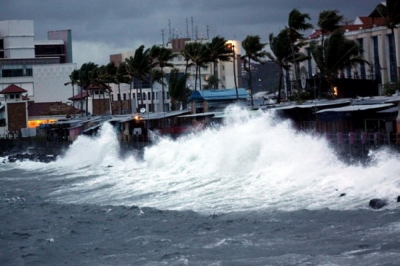
Kupang, E Nusa Tenggara - Flooding triggered by tidal waves hit seven subdistricts in the eastern Indonesian island of Flores on Wednesday.

"Preliminary data show 269 houses, seven school buildings and two mosques were damaged by the tidal waves," head of the Sikka district natural disaster mitigation board Heriando Siku said.

The buildings are located in the seven subdistricts of Alok, Alok Timur, Alok Barat, Talibura, Magepanda, Kewapante, and Kangae.

Heriando said the agency with the help of disaster response team and local residents had since Tuesday night evacuated more than 400 people to temporary shelters at Waioti, Nangahale, and Talibura areas.

"The number of evacuees accommodated at the temporary shelters is about 439," he said adding that the agency had set up three field kitchens to meet the victims` food needs.

To meet the evacuees` food needs, the district natural disaster mitigation board and the social service office had distributed rice, instant noodle and other emergency response aid among them, he said.

Meanwhile, Sunardin, a member of the Sikka district legislative council (DPRD) asked Sikka district head Somisum Mitang to build retaining walls on the district`s northern coast and relocate local residents who often fell victim to tidal waves every year.

"The tidal waves occur every year. There is no other choice but to build retaining walls and relocate local residents," he said.
Read More....

Saturday, December 11, 2010

RI, Mexico to Cooperate On Climate Change Issues

Saturday, December 11, 2010

Cancun, Mexico, Indonesia and Mexico have agreed to cooperate in the handling of climate change issues such on reducing emissions from deforestation and forest degradation (REDD+) and climate change adaptation.

A Memorandum of Understanding on the cooperation was signed by Indonesian Environment Minister Gusti Muhammad Hatta and Mexican Environment Minister Juan Rabael Quasada on the sidelines of the Sixteenth Climate Change Summit here on Friday.

After the signing of the MoU, the Indonesian minister said Indonesia and Mexico would exchange experience in the handling of climate change issues.

"Mexico has its own speficic problems but it also sees that we are country playing a front line role regarding climate change," Hatta said.

He said that Indonesia would also learn a lesson from Mexico which had issued a list of an inventory on green house effects in its fifth national communication report.

In the meantime, Australia has declared itself a strong supporter of Indonesia`s efforts to address climate change and announced an allocation of $45 million to Indonesia as part of Australia`s $599 million fast start climate change financing.

According to Australian Embassy media release in its official website on Friday, Foreign Minister Kevin Rudd said his country welcomed Indonesia`s strong leadership on climate change and the opportunity to build on Australia`s long-standing cooperation with Indonesia on reducing emissions from deforestation and forest degradation (REDD+) and climate change adaptation.

"Reducing emissions from deforestation and forest degradation - which accounts for 18 per cent of global emissions and more than 60 percent of Indonesia`s total emissions in 2005 - is critical to achieving a global outcome on climate change," Rudd said.

New funding of $30 million will extend support for our demonstration work in Kalimantan and accelerate joint work on Indonesia`s National Carbon Accounting System, taking Australia`s total support for Indonesia`s REDD+ efforts to $100 million.
Read More....

Sunday, December 5, 2010

APP and APRIL Undermine REDD - Plus in Indonesia

Sunday, December 5, 2010

EoF releases Nov 2010 Investigative Report

PEKANBARU (EoF News)—The way climate change issues continue to be ignored in the province of Riau today is becoming a make-or-break issue for the development of a national REDD strategy for Indonesia and the one billion US dollar Indonesia-Norway cooperation on reducing GHG from deforestation and forest degradation, Eyes on the Forest reports this week.
    
Riau is and will be Indonesia’s epicenter for climate change from loss of natural forest and peat drainage. It had the country’s highest rate of natural forest loss and of peat soil degradation and their respective associated emissions in recent years. It has the largest volume of peat soil in Indonesia and the second largest area of natural forest in Sumatra. 

Most of all, much of the natural forest loss and peat degradation in Riau is “planned, legal deforestation,” which would be easy to stop if government had the will to do so.
In July 2010, EoF reported on wide-spread natural forest clearance and peat drainage in Riau Province based on annual cutting licenses (RKT) issued by the Indonesian Ministry of Forestry in 2009. Today, a new EoF investigation confirms that business as usual continues in Riau despite signing of the Indonesia-Norway forest-carbon partnership. Shanghai-based Asia Pulp & Paper (SMG/APP) and Singapore-based APRIL are undermining the Indonesia-Norway climate partnership by clearing up to five percent of the remaining natural forest in Riau, an area almost twice the size of Indonesia’s capital Jakarta.

The 2010 RKT permits , that SMG/APP and APRIL have acquired, allow the companies to clear good natural forests, 90% of which stand on peat soil. Most of the peat is more than 4 meters deep and is thus being drained and cleared in violation of Indonesian law. Most of the areas were either identified as having high conservation values (HCV); are inside the recently established UNESCO Giam Siak Kecil-Bukit Batu Biosphere Reserve; and/or are the internationally recognized important Tiger Conservation Landscapes of Bukit Tigapuluh, Kampar Peninsula, Kerumutan and Senepis-Buluhala.

Using examples from the UNESCO reserve and from Kampar peninsula, EoF’s new report details how the reported clearance of natural forest and drainage of peat is in direct violation of both SMG/APP and APRIL’s public commitments to sustainability and the much repeated advertisements with which they applaud themselves for their own so-called “green” achievements.

While harvesting of natural forest wood and draining of peat soil in Riau have been the main sources of Indonesia’s huge greenhouse gas emissions for years, REDD discussions in Indonesia have long neglected the global climate impacts of Riau’s paper industry, allowing their devastating destructive operations and the resulting carbon emissions to continue unchallenged.

Based on the evidence presented in this report, Eyes on the Forest urges the Government of Indonesia to declare an immediate moratorium on all clearing of natural forest by these two paper companies to allow time for a thorough review of their operations and the licensing processes that lead to their clearance of natural forests and draining of deep peat against the laws of Indonesia. Given the devastating climate impact of the pulp industry, such a review of its operations should be highly instructive for the nation’s REDD+ strategy.
It is not too late for action by the local and national governments, companies, people and the global climate community. If the Indonesia-Norway cooperation is to have an impact on reducing GHG from deforestation and forest degradation there is no better place to start than Riau.

Eyes on the Forest received the following comments by the Ministry of Forestry on this report:

 1. Environmental safeguards  for plantation development within the regulations are covered in the process of Macro and Micro delineation and the Ministry of Forestry are moving towards improving this in the process of awarding new license. 

2.    For existing permits, there are limited options to ensure that natural forest is not developed into plantation forest. As these permits are legally binding, the Ministry is seeking solution to ensure that the government can reduce that. 

3.   According to the laws of Indonesia, conversion of natural forest into plantation is not deforestation. The Ministry of Forestry has made plans on 30 million hectare of Production Forest that are not currently under management, and not all of those areas are for plantation. Only heavily deforested land will be given to plantation forest development and the rest will be allocated for community forest, natural production forest concession and restoration.


Read More....

Friday, December 3, 2010

WES implemented in six provinces

Friday, December 3, 2010

Mataram, W Nusa Tenggara, Indonesia and Unicel are carrying out a Water and Environmental Sanitation (WES) program in six provinces and 25 regencies and cities in Eastern Indonesia including West Nusa Tenggara.

"The WES program gets a Swedish and Dutch funding support of 23 million US dollars for the 2006-2010 period," WES coordinator Francois Brikke told the press here Wednesday.

He said three WES programs is focused on three main components namely villages, schools, and cities for the implementation of the program in 180 villages, five major cities, and 500 elementary schools.

Francois is in Mataram, West Nusa Tenggara, to attend a WES program coordinating meeting followed by 125 members of the working group in Indonesia.

Under the current WES program, national coordination is aimed at synergizing implementation of the WES program at central government down to regional administration level, indentifying and developing an alternative solution to issues and strategic problems arising from the program implementation and experiences.

Three regencies and one city had been chosen as the best regencies/cities including Mataram city, West Nusa Tenggara, now host of the national WES working conference.

In the meantime, East Sumba, Tarakan, and Biak Numpo regencies and the WES program are currently entering the final year.

The coordinating meeting is expected to produce a synergetic working plan between the players of national, provincial and regency level and implementation of the WES program for the 2011-2015 period.

Touching on clean water services, he said the building of waterworks and sanitation on a national level had not been so satisfactory.

According to official data, the proportion of households enjoying running water facilities reached only 18.38 pct, and those enjoying protected running water facilities reached 43.57 pct.

"With regard to the disposal of waste water, the proportion of people disposing their wastes arbitrarily is quite high, still reaching 30.7 pct," he said.
Read More....

First Lady Yudhoyono dedicates prosperous village


Tangerang, Banten, First Lady Ani Yudhoyono dedicated prosperous village at Tangerang district in Banten province on Wednesday morning.

The prosperous village is developed by the United Indonesia Cabinet ministers` Wives Solidarity (SIKIB) at Tanjung Pasir sub-district in Tangerang, Banten province.

Ani Yudhoyono in the company of Vice President Boediono`s wife Herawati Boediono arrived at the venue at 8.25 on Wednesday morning to dedicate the prosperous village.
The first lady is scheduled to sign an inscription to mark the dedication of the prosperous village, developed by the SIKIB.

In addition, Madame Ani Yudhoyono will also launch Nusantara White-water Devotion by planting trees and spreading young fishes.

As part of the dedication, the first lady will also hold a dialog with the local elementary school students and to inspect health civic mission activity.

The dedication of the prosperous village is the peak event of the "Women Plant and Cultivate Trees Campaign 2010" which was launched by President Susilo Bambang Yudhoyono at the Manggala Wanabakti auditorium in Jakarta on Tuesday, November 23, 2010.

The Women Plant Trees Campaign is a yearly activity which was started four years ago with different themes and formats of activity each year.

In 2010, the program was focused on the activity of planting trees such as Ketapang and mangroves in coastal areas. It is expected that the program will improve the people`s economy and boost their awareness to preserve forests in coastal area.

The Tuesday inauguration also featured an exhibition and conference themed "Protection of Coastal Forests and Improvement of the People`s Prosperity."
Earlier, the People`s Coalition for Fishery Justice has appealed to the government on the need to preserve and improve mangrove forests.

The mangrove preservation is necessary to prevent them from disappearance from the face of the earth because the forests provide ground for fishes, shrimp, and mollusks for spawning and growing.
Read More....

Tuesday, November 30, 2010

Maluku Planted 7,000 Trees on Monday

Tuesday, November 30, 2010

Ambon, Maluku, The "One Billion Indonesia Trees" program was launched in Maluku Province on Monday with the planting of 7,000 trees by regional administration officials and people simultaneously in 11 districts/cities.

"At Ambon city`s Pattimura golf course, at least 400 young trees were planted, consisting of 170 wood and 230 fruit species," the head of the Maluku forestry office, Berthy Papilaya, said here on Monday.

Papilaya said, of the 400 young trees, 65 were merbau (Intsia Palembanica), 65 linggua (Pterocarpus indicus) and 40 sengon (Albazia falcataria )saplings. The rest was made up of 40 rambutan (Nephelium lappaceum), 10 mango, 50 breadfruit and 65 petai (Parkia speciosa) and 65 durian (Durio spp) saplings.

"We expect the one billion trees target in Maluku to be achieved by the end of January 2011," he said.

According to Papilaya, the tree planting movement actually began in February 2010 and was desired to help reduce the effect of global warming, greenhouse gas emissions, and lower the risk of floods and landslides in the rainy season and droughts during the dry season.
Read More....

US partnering with Indonesia to stem deforestation


Jakarta, USAID is partnering with the government of Indonesia to stem deforestation, reduce greenhouse gas emissions, and support climate change adaptation, according to the US embassy here on its Website.

The USAID Indonesia Forestry and Climate Support (USAID IFACS) project supports the new U.S.-Indonesia Comprehensive Partnership announced during the recent trip by President Barack Obama.

The USAID IFACS project will reduce the threats of deforestation and climate change, and help the Government of Indonesia to conserve the country`s tropical forests and wildlife (including orangutans).

In doing so, the project will support activities to reduce carbon emissions and soil erosion and increase the availability of clean water. The project will work with Indonesian central, provincial, and local government agencies as well as NGOs, local communities, and the private sector.

This four-year $40 million project is expected to result in a 50 percent reduction in the rate of forest degradation and loss from conversion, illegal extraction, over-harvesting and climate change for six million hectares.

It will improve management of 3.5 million hectares of selected tropical forest to deter illegal logging. Changes in land use practices and improved forestry management will result in a 50 percent reduction in greenhouse gas emissions in the targeted areas.

The project provides strong support for Indonesian climate change objectives by supporting Indonesia`s REDD+ National Strategy as well as leveraging Norway`s $1 billion effort to increase forest conservation and reduce carbon emissions in Indonesia.
Read More....

Sunday, November 28, 2010

President Sends an Anti-Deforestation Message

Sunday, November 28, 2010

Purwakarta, W Java, President Susilo Bambang Yudhoyono called on all parties to stop deforestation, caused by mismanaged mining activities.

"On this podium, I want to tell those who are irresponsible, like cutting trees, and destroy mother nature due to their mismanaged mining activities, please stop doing that," he said here Sunday.

Speaking at the Indonesian planting tree day, held in Cibinong village, Jatiluhur subdistrict, West Java district of Purwakarta, Indonesia would suffer long-term losses if
its forests were not well managed from this time.

"If we keep planting a billion trees and make it our national movement, in which the government is not the only party involving in it, with God`s willing, our country will have a good environment within the coming 30 years," he said.

The head of state said the efforts to plant trees would not give significant benefits if they were not followed by good care. With the good care, the trees would grow up and give long term benefits.

Therefore, President Yudhoyono urged the entire nation to start building the planting tree culture.

"Build the culture from our hearts and minds. All should be started from loving the mother nature. I often say `plant today for tomorrow`s harvest`," he said.

At the occasion, the head of state also asked the environment ministry to tighten its assessments for the Adipura award recipients.

"The cities, which had been awarded the Adipura in the past but failed to remain committed to maintaining their clean environments, their Adipura awards can be withdrawn," he said.

The event was attended by First Lady Ani Yudhoyono, Vice President Boediono, a number of ministers and senior politicians, as well as military and police chiefs.
Read More....

President Attends Tree-Planting Day Commemoration


Purwakarta, West Java, President Susilo Bambang Yudhoyono attended the commemoration of national tree-planting day near the Jatiluhur dam in Purwakarta district, West Java, on Sunday.

The President also held teleconference with East Java Governor Soekarwo, South Sulawesi Governor Syahrul Yasin Limpo and South Sumatra Governor Alex Nurdin as well as with local farmer groups as part of the commemoration.

On the occasion, President Yudhoyono, First Lady Ani Yudhoyono, Vice President Boediono and his wife Herawati Boediono planted trees near the dam.

Also present at the event were a number of ministers, West Java Governor Akhmad Heryawan and Purwakarta District Head Dedi Mulyadi.

The government intends to plant one billion trees this year as part of the effort to reduce greenhouse emissions from the forestry sector.

Forestry Minister Zulkifli Hasan said some time ago about 500 million of the trees would be planted by the government on 500,000 hectares of land financed by the state budget and the rest by industrial forest concessionaires and private companies.

The one-billion-three-planting campaign is a follow up to President Yudhoyono`s pledge to cut greenhouse gas emissions from the energy and forestry sectors by as much as 26 percent in 2020.
Read More....

Saturday, November 27, 2010

4,000 Indonesian Islands May Disappear Due to Global Warming

Saturday, November 27, 2010

Makassar, Around 4,000 islands in Indonesia may disappear when the sea surface rises due to global warming, a government official said.

"Global climate change could cause the sea level to rise high enough submerge 4,000 islands in Indonesia," William Suhandar, deputy to the head of the Presidential Work Unit for Development Management and Supervision (UKP4), said here Saturday.

As many as 4,000 of Indonesia`s 17,500 islands might disappear if the sea level rose by two meters, he said.

"This will be unavoidable if global warming continues causing the sea level to keep rising as happened thousands of years ago when ice bergs melted," he said.

The earth`s surface temperature had risen 0.7 degrees Celsius over the last 100 years, he said, adding that this was tangible and reasonable evidence of climate change.
Moreover, the period 1995-2010 had been recorded as the hottest in the last 150 years since 1850, he said.

"There has been an unusual shift in rainfall patterns so that it is now difficult to distinguish the seasons, to differentiate the rainy from the dry season," he said.

Extreme weather and temperatures which occur every year could lead to or trigger natural disasters, he said.

He aid there were two major causes of climate change. One was mismanaged land utilization, deforestation and carbon emission from fossil fuels that exacerbate the green house effect in the atmosphere leading to rising global temperature.

The increasing global temperature could cause the sea level to rise and this posed a threat to around 4,000 islands in Indonesia, he said.

Mitigation of and adaptation to climate change could be advantageous to minimize the effect of global warming and climate change, he said.
Read More....
free counters
Photobucket Yahoo bot last visit powered by MyPagerank.Net Family Blogs

Subscribe via email

Enter your email address:

Delivered by FeedBurner

Friends Of The World

Chat Blog's

Total Pageviews

Popular Blogging

 
Copyright © Reading Opens World Horizon | Powered by Blogger